WeChat restaurant reservations: the only door to a mainland Chinese guest
A traveller from Shanghai lands in Hong Kong, Macau, Bangkok or Singapore. Their phone has no WhatsApp, no Instagram, no Google Maps — those apps don't work back home and they've never installed them. What they do have, and use for everything from paying the taxi to messaging their family, is WeChat.
If your restaurant can't be reached on WeChat, that guest cannot book with you directly. They will go through whichever platform is on their phone, or they will go somewhere else. Across Greater China and the tourist-heavy cities of Southeast Asia, WeChat restaurant reservations aren't a nice extra — they're the difference between being reachable and being invisible to one of the highest-spending groups of diners in the region.
What a WeChat restaurant booking looks like
A guest opens your WeChat Official Account — because they scanned the QR code on your table tent, followed you after their last visit, or found you shared in a group chat — and simply writes: "周六中午两位有位吗?"
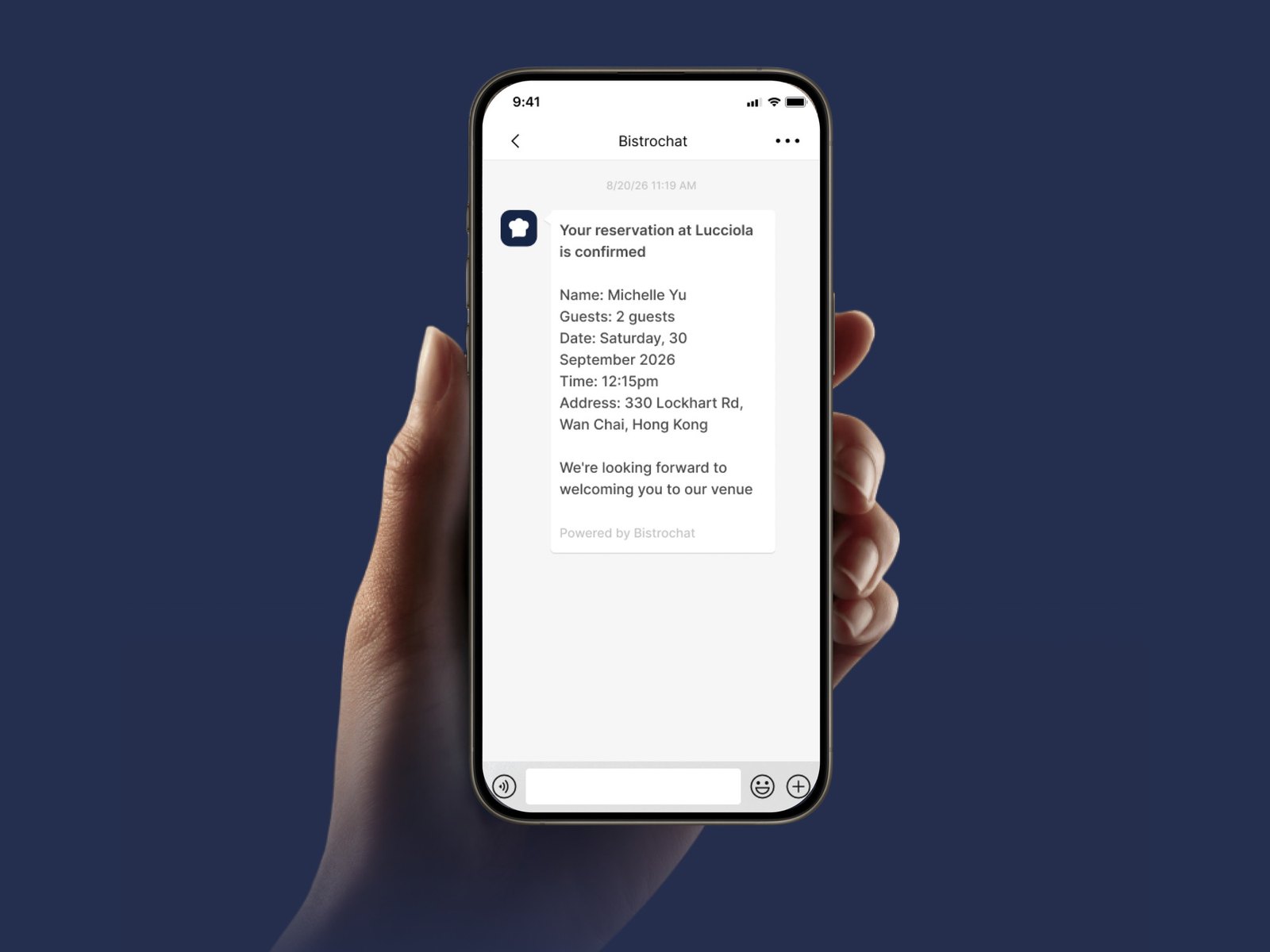
Bistrochat's AI replies in seconds, checks your real availability, offers times, and books the table. The guest gets a confirmation card right there in the chat: the venue name, guest name, party size, date, time and address, with "Powered by Bistrochat" underneath.
No app to install, no account to create, no booking link that throws them out to a mobile website that may load slowly — or not at all — on a mainland connection. If plans change, the guest just writes back in the same thread: "改到七点" or "取消". The AI understands, updates your floor plan, and confirms. Because cancelling is as easy as writing one line, guests actually do it instead of quietly no-showing.
The AI answers every message, 24/7, in 80 languages
Bistrochat's AI chatbot takes, changes and cancels restaurant reservations on WeChat automatically, around the clock. It speaks 80 languages — Mandarin and Cantonese, English, Thai, Vietnamese, Tagalog, Hindi, Tamil, Bahasa Indonesia, Malay, Japanese, Korean, Khmer, French, Russian, German, Spanish and dozens more — so a guest writing in Simplified Chinese at 2am Beijing time gets an instant, correct answer even though nobody on your floor speaks Mandarin.
That matters more on WeChat than on any other channel. Most restaurant teams outside mainland China cannot staff a Chinese-language inbox at all, so the account gets created, printed on a QR sticker, and then left unanswered. An account nobody answers is worse than no account: the guest messaged, and got silence.
When a conversation needs a human — a banquet inquiry, a complaint, a VIP — your team sees the whole thread and takes over in one tap. The AI steps back; nothing is lost.
WeChat Pay deposits, paid without leaving the chat
WeChat isn't only a messenger — it's a wallet. A mainland guest usually has no international credit card in their phone, but they always have WeChat Pay. That's why deposits on WeChat convert where card guarantees fail.
- Deposit Payments can be required by party size, shift or special date — Lunar New Year, Christmas Eve, a chef's table — and paid without leaving the conversation, via WeChat Pay, Alipay / AlipayHK, PromptPay, PayNow, GrabPay, Apple Pay, Google Pay, VISA and Mastercard.
- Automatic reminders go out on WeChat before the meal, in the guest's own language.
- Changes and cancellations come back to you in time to resell the table instead of losing the cover.
For a full breakdown of which method works in which market, see our guide to restaurant deposit payments across Asia.
Real availability, real table management — not a chatbot bolted on
Generic chatbot tools can reply to a WeChat message. They can't seat a restaurant. Bistrochat is a full reservation and table management system, so every WeChat booking is checked against the same live floor plan as your phone bookings, walk-ins, website widget and every other channel. Tables are allocated by the priorities your staff set, larger parties get combined tables automatically, and double-bookings simply can't happen — the chat and the book are one system.
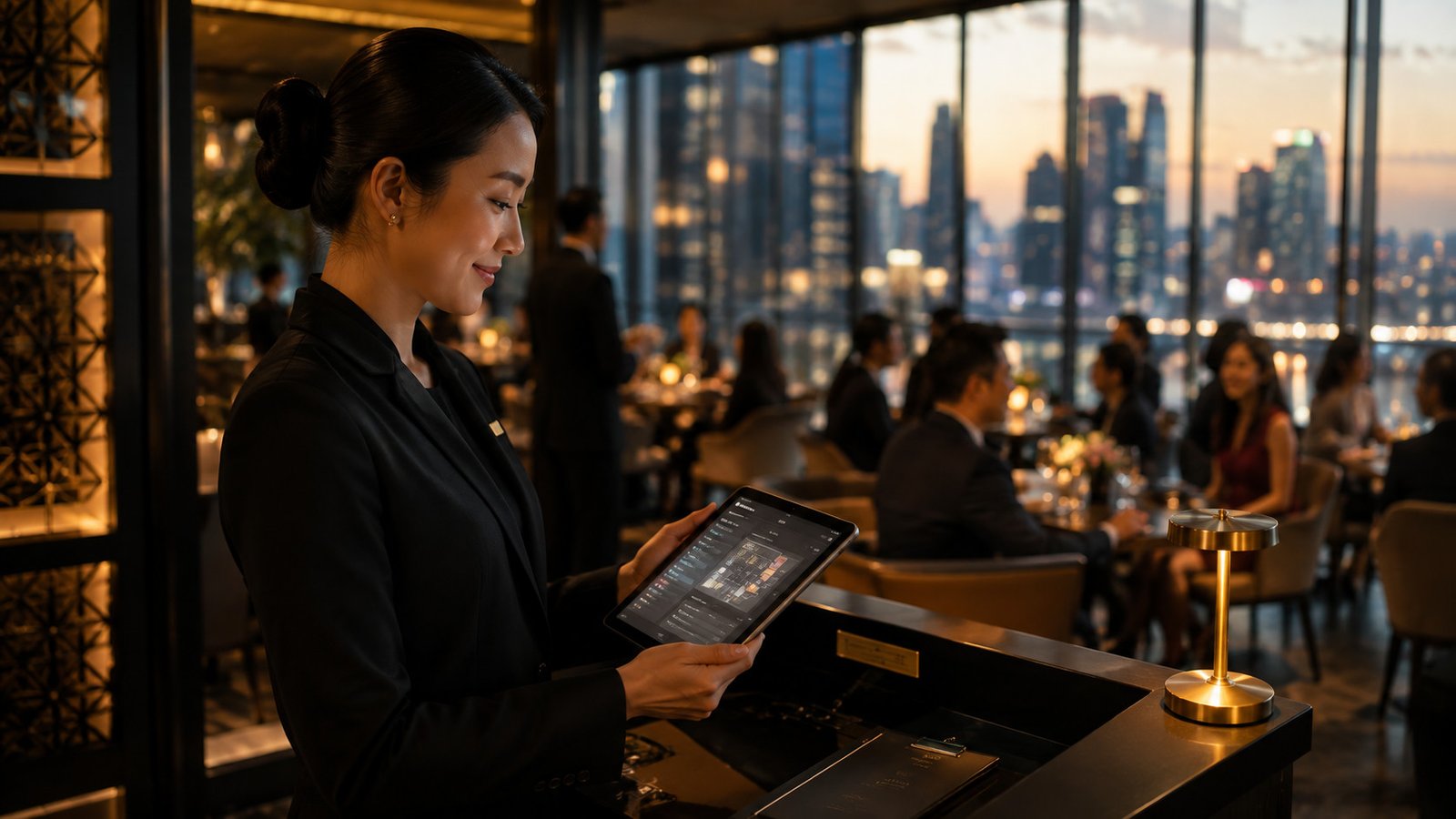
Your host doesn't open a separate WeChat inbox on a shared phone. They work the same floor plan they always do, and the WeChat bookings are already on it.
Every WeChat booking builds your guest database
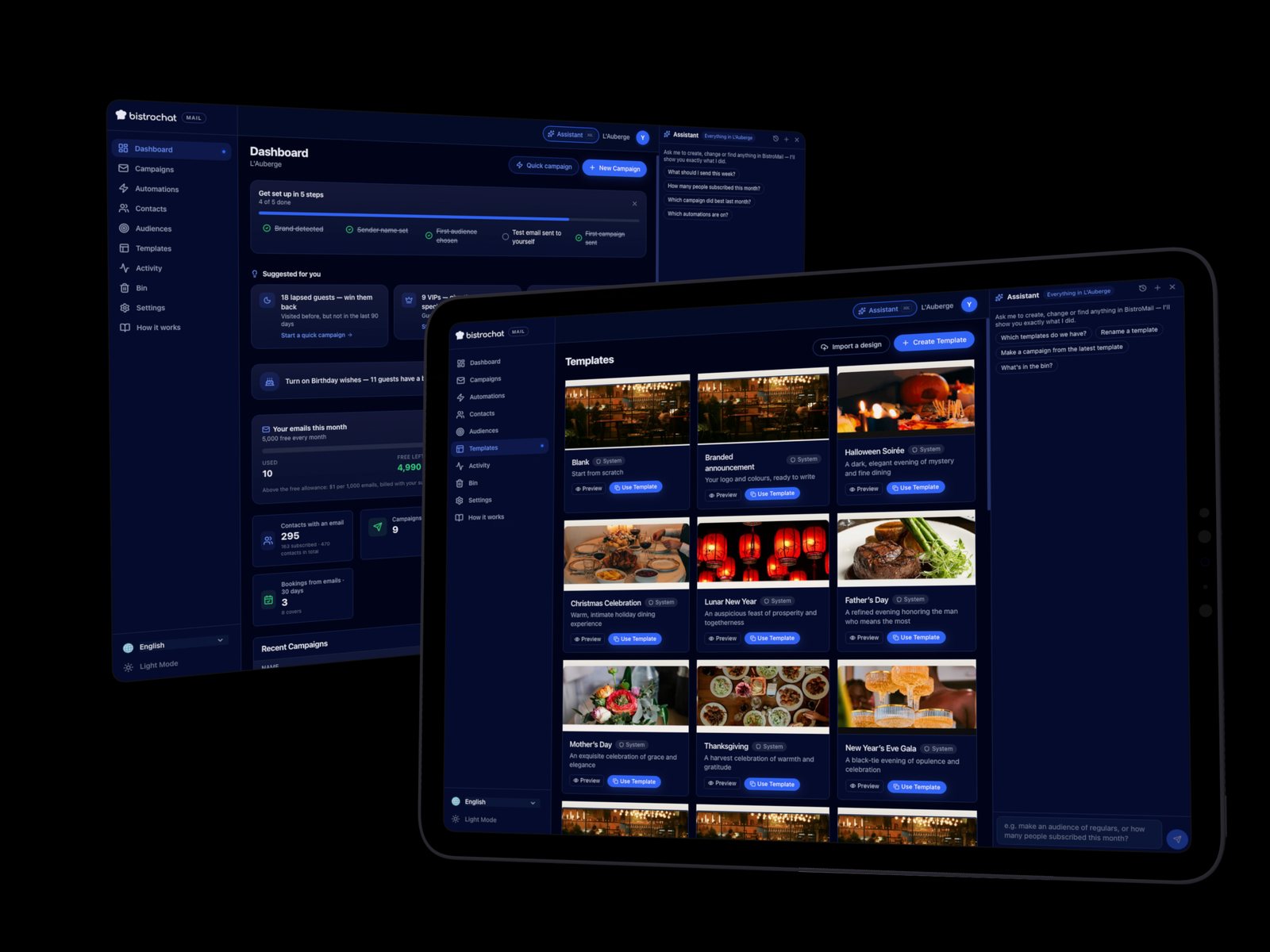
Each conversation feeds your guest CRM: visits, preferences, special requests, allergies, and — with Bistrochat's POS integration — what the guest actually ordered and spent, per visit and per cover. The Shanghai regular who books through WeChat twice a year isn't an anonymous handle; they're a profile your team recognises the moment they walk in, with last year's table and last year's wine already on the screen.
That database is yours. It doesn't live inside a booking marketplace that rents your own guests back to you.
What you need on the WeChat side
You need a verified WeChat Official Account — specifically a Service Account (服务号), which is the account type overseas businesses register, and the one that unlocks WeChat Pay, API access and interactive menus. Verification runs ¥300 RMB for mainland entities or USD $99 for overseas entities, renewed annually, and the whole registration-plus-verification process typically takes one to four weeks depending on your entity.
We wrote the full walkthrough — account types, documents, costs, timelines and the pitfalls that get applications rejected — in How to create a WeChat Official Account for your restaurant. Once the account is verified, connecting Bistrochat to it is part of onboarding, not a project.
WeChat is one channel of many
The same AI answers and books on WhatsApp, LINE, Telegram, Zalo, Messenger and Instagram, and the same table plan powers your website widget, Google Reserve and Openrice. The Shanghai visitor uses WeChat, the Hong Kong regular uses WhatsApp, the Bangkok expat uses LINE — and you get one book, one guest database, one system.
FAQ: WeChat restaurant bookings
Do guests need to install anything? No. They message your Official Account inside WeChat, exactly like messaging a friend. Confirmation, reminders, changes and the deposit all happen in that chat.
Do we need a mainland China company to do this? No. Overseas entities — Hong Kong, Macau, Singapore, Malaysia, Thailand, Vietnam, Indonesia, the Philippines, Cambodia and more — can register and verify a WeChat Service Account directly with their local business licence.
Can the AI handle Chinese if nobody on our team speaks it? Yes. It replies in 80 languages including Simplified Chinese, Traditional Chinese and Cantonese, automatically matching the language the guest writes in.
What happens to bookings made by phone or walk-in? They sit in the same system, on the same floor plan. WeChat is a channel, not a separate book.
Can we still talk to guests ourselves? Always. Staff can jump into any conversation and take over from the AI in one tap.
What does it cost? Bistrochat is a flat monthly subscription per venue — no per-booking or per-cover fees, so a fully booked Lunar New Year costs the same as a quiet Tuesday.
Your next guest from Shanghai, Shenzhen or Chengdu is going to look for you on WeChat. If you'd like them to find a restaurant that answers — in their language, at any hour, with the table already confirmed — get in touch — the reservation system for every booking channel.